Over the last decade, women’s relationship with sport and fitness has changed dramatically.
A 2022 IHRSA global report stated that women make up around 57% of gym-goers globally. In Singapore, female regular sport and exercise participation rose from 50% in 2015 to 72% in 2024, while male participation rose from 58% to 76% over the same period, indicating both an overall rise in activity and a narrowing of the gender gap.
In the professional arena, women’s sport is becoming a serious commercial category. Mintel reported that in 2025, more than two-thirds of Americans followed at least one women’s sport, up from just over half in 2022. Genius Sports has also cited research showing that ads during women’s sports drove 40% more engagement than primetime TV spots, and that 67% of women’s sports fans make a point to support brands that sponsor their favourite teams or athletes. Deloitte has forecast that global women’s elite sports revenue will reach US$3 billion in 2026, up from US$2.4 billion in 2025, with revenues expected to be 340% higher than in 2022.
Of course, participation and fandom are not the same thing. A woman who goes to reformer Pilates is not automatically a women’s basketball fan. A runner does not necessarily become a football spectator. But the two are culturally related. As sport becomes more normal in women’s daily lives, female athletes become more legible as aspirational figures.
More women are familiar with the pleasure, discipline, frustration, confidence and community that comes from movement, and that makes professional female athleticism feel more relevant.
This is the wider cultural condition beauty brands are responding to.
Athletic beauty or athbeauty started I around 2017, when it became socially acceptable for people to wear gym clothes in non gym settings. But for a long time, the beauty side of this shift remained relatively narrow. It mostly meant sweat-proof makeup or dry shampoo. It was probably hard to show up with customers when they were simply training in the gym. There was also still a separation between gym life and normal life.
However, Pinterest’s recent summer trend reporting has pointed to the growing influence of sports culture on fashion and consumer interests. Fashion often acts as an early visual language for deeper shifts in beauty.
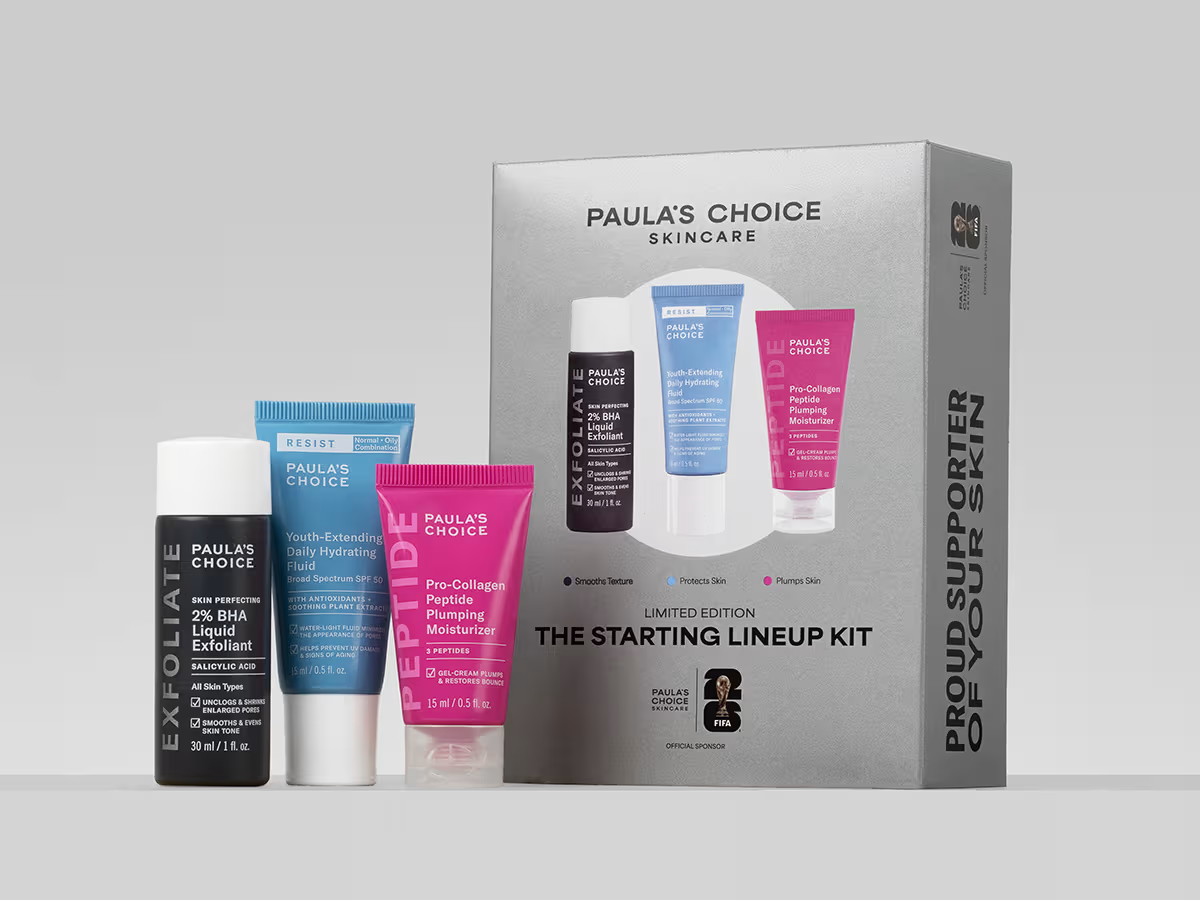
The recent movement of beauty brands into sports sponsorships is also telling. Paula’s Choice sponsoring the FIFA World Cup and Skinceuticals sponsoring Ferrari's F1 team suggest that beauty brands are beginning to understand sport as more than a media placement. Sport gives brands access to a highly engaged, values-heavy audience, but it also gives them something harder to buy: repeated cultural moments. Sport has seasons, games, rituals, rivalries, teams, athletes, fandoms and shared emotional stakes.
Here is how I think sports will influence the broader beauty culture. Products will be more much more unisex, with men readily incorporating body care products. In fact I think this will be the nucleus that men's care to really take off. Perhaps the gateway drug for men wasn't a 'charcoal face cleanser' but a Skincuticals CE Ferulic serum.
Sport also makes the body more visible as a full system. Beauty has spent years obsessing over the face, but movement brings attention back to shoulders, thighs, feet, backs, scalps, underarms, hands and friction points. Body care is already rising as a category, so it is not difficult to imagine the next wave of body claims becoming less about anti-ageing and more about care post movement. 'It will likely evolve beyond “sweat-proof” claims into a more sophisticated language of athletic care that will come into mainstream: quick-dry, breathable, cooling, anti-chafe, scalp-refreshing, rinse-friendly and deodorizing.
Fragrance is another area that will be affected. We will see fragrance trends may lean brighter, cleaner, more citrus. Skin musks work particularly well with skin lipids and complement natural scents. We are already seeing a rise in skin musk style fragrances such as Glossier You, and Phlur’s Missing persons.
We have to acknowledge that sport changes beauty’s idea of the body. Beauty has often treated the body as an image but sport treats the body as an machine to be cared for and maintained.
This can be useful framing for product development.
We don’t only ask; how does this make the body look?But we should also ask: how does this support the body while it is being used?
There is a huge playing field here, and the most interesting brands will not just place beauty products next to sport. They will allow sport to change the product brief itself. The future of athletic beauty might be about making beauty useful to the body that moves.