At some point in almost every brief, a founder says some version of "we want to do clinical testing."
It's usually considered at the beginning, when ambitions are high, and then slowly forgotten once the development bills rack up. The stakes are getting higher every year, and more and more brands need to invest in some sort of testing to prove their claims. Yet many briefs never turn that request into a proper strategy and plan; there's already enough to juggle with R&D, packaging and regulatory.
Before you put a formula through a test that costs thousands of dollars, there are steps to take to make sure it will actually produce the result you want, and that the result will actually back the claims you want to make.
Clinical testing isn't reserved for big brands with big budgets. They do cost money, but if planned for and budgeted right, even smaller brands can submit their formulas for clinical trials
The brands that get the most out of testing aren't the ones with the biggest budgets. They're the ones that thought about it systematically. The last thing you want to do is to spend money on a clinical trial, for it to fail or produce a result that is unrelated to your product.
The most useful thing you can do before speaking to a testing house is be clear of what claims you want to make.
Every claim falls into one of a few buckets, and each bucket asks for a different kind of evidence:
- Measured claims. "Increases skin hydration by X% after 24 hours." This needs an instrument on skin, a baseline, a timepoint and a panel.
- Perceived claims. "9 out of 10 said their skin felt softer." This needs a consumer panel and a well-written questionnaire.
- Safety claims. "Dermatologically tested", "suitable for sensitive skin." This needs patch or repeat-insult testing, under supervision.
- Ingredient claims. "Contains an ingredient shown to support…" This can often lean on supplier data, if you're honest about what was tested (the ingredient, at what level) and what wasn't (your formula).
- Regulated claims. SPF is the obvious one. It has its own standards, its own methods and its own regulatory pathway, and it is not a cosmetic testing decision.
Once your claims are sorted, two things usually happen. Half the list turns out not to need a trial at all. And the remaining half gets sharper, because you can see which one or two claims would genuinely change whether someone buys. This is where you put the budget.
The next decision is to choose between an instrumental study or a consumer perception study for each claim.
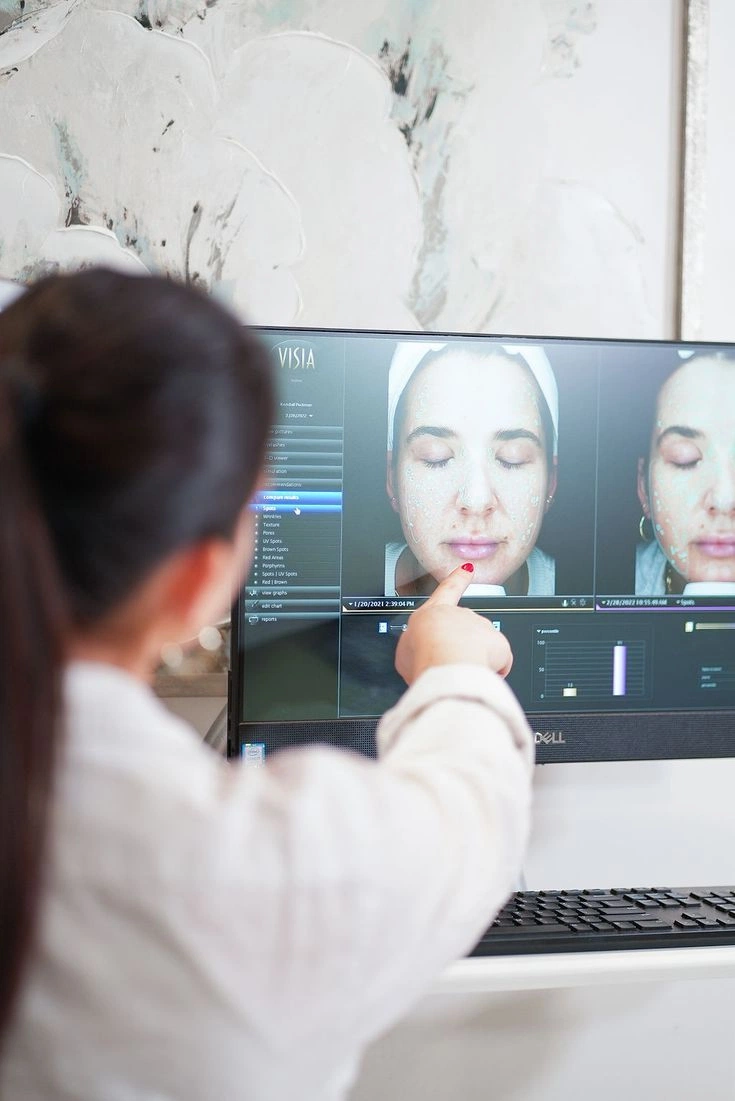
An instrumental study puts a device on skin. For example, a corneometer reads hydration, while a TEWL probe reads barrier function. You can use a cutometer to measure elasticity, or specialised imaging systems to assess tone and texture. These types of studies give you a reading comparing before and after use.
A consumer perception study gives the product to a panel and asks how it felt, what they noticed and whether they'd buy it again. This type of study gives you agreement percentages.
A perception panel can't give you "reduces fine lines by 28%." An instrumental study is overkill if what you really need is "loved by 9 out of 10."
Instrumental studies aren't necessarily better than consumer perception studies; they just support different sentences.
What to think about when designing a test
Once you know which type of study you need, the testing house will ask you a handful of questions to design it. It helps to have your answers ready, because each one changes what the study can prove and how much it costs.
- What claims do you want to make? Everything else flows from this. The claim decides what gets measured, how long for and on whom. "Visibly smoother skin after 4 weeks" is a different study from "instantly hydrates."
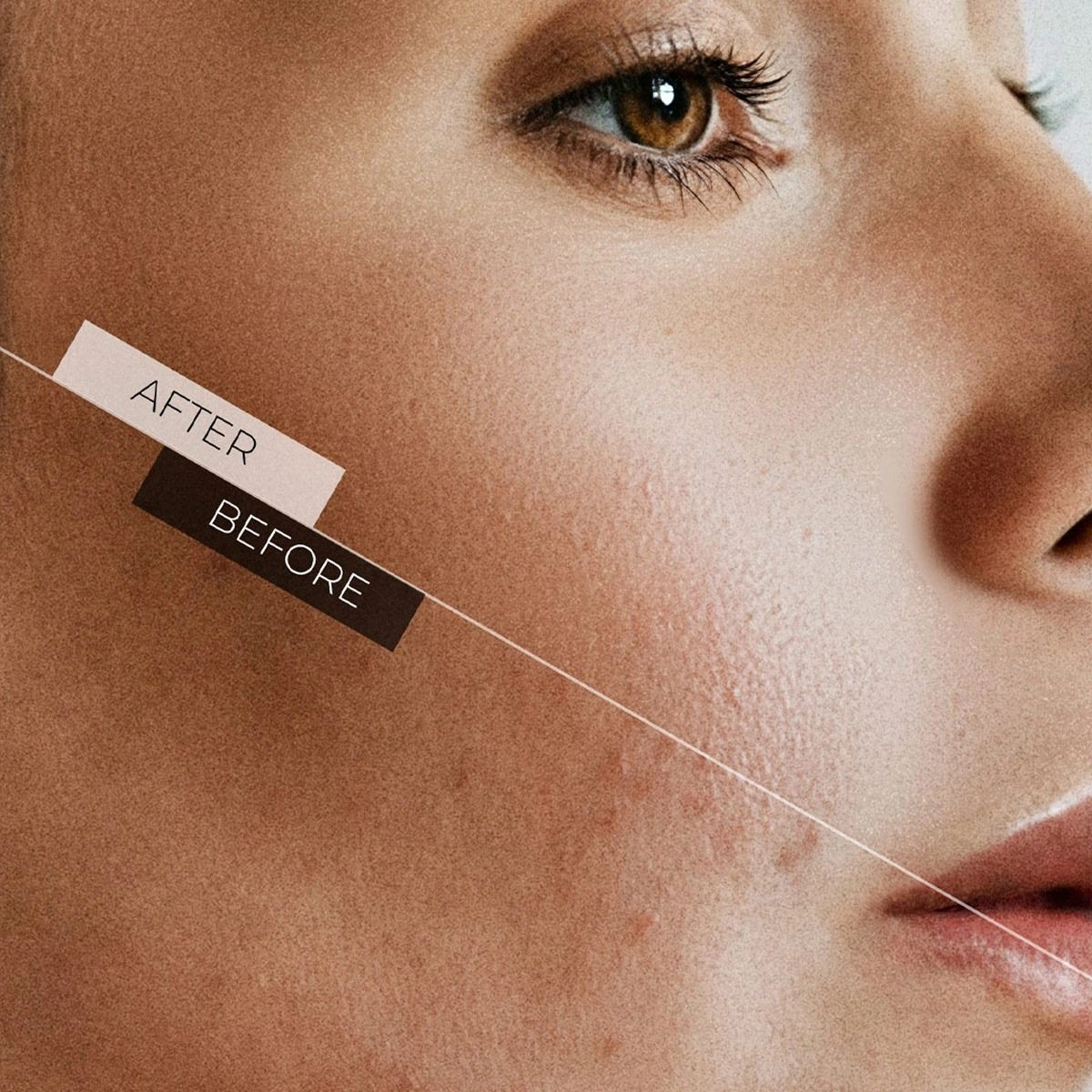
- Do you want before and after photos? They're powerful for marketing, but they need to be taken properly: standardised lighting, positioning and imaging, at every timepoint. However, validated before an after images usually cost extra. Check that participants have consented to their photos being used in your marketing, and never retouch them. An edited "after" photo is a misleading claim.
- Who do you want to test on? This is your target customer, written as a recruitment brief. For example: women aged 35 to 55 with visible fine lines, or people who already use a retinol and experience dryness. The closer the panel is to your actual customer, the more meaningful the result. Note, the more specific your test pool is, the higher the potential costs.
- Where will the test be run? Location shapes who gets recruited. A study in India will mostly recruit Indian participants, and a study in Europe will skew towards lighter skin tones. Climate matters too, especially for hydration and barrier results. Choose a location whose panel reflects the customers you're selling to.
- How many people do you need? More people gives you a more robust result, but costs more. Around 20 to 30 is common for instrumental studies, and around 30 or more for consumer perception claims. Ask the testing house what they'd recommend for your claim.
- How long will the test run? Some results are immediate or show up within 24 hours, like hydration. Others, like texture or fine lines, need four to twelve weeks. The timepoints you choose become part of your claim ("after 28 days"), and every extra timepoint adds cost.
Now, its all well and good to invest in clinical trials so you can plug your product, but you still need to sit within the regulatory boundaries. In Australia, two questions sit over every claim, and data only answers one of them.
The first is whether the claim is true. Australian Consumer Law doesn't care how beautiful your study was; it cares whether what you said misled anyone. A percentage pulled from a 20-person panel, stripped of its timepoint and blown up on a carton, can be technically sourced and still create the wrong impression.
The second is whether the claim is cosmetic at all. Cosmetics can cleanse, protect, perfume, change appearance and keep skin in good condition. Once a claim starts to describe treating, healing or changing how the body works, it can drift toward therapeutic territory, which is a different regulator and a different set of rules. "Stimulates collagen production" is the classic example. You may well have in-vitro data showing it. That doesn't make it a cosmetic claim.
This is the part founders find counterintuitive. Better data can tempt you into stronger language, and stronger language is exactly what moves a product across the line. The study and the claims review need to happen together, not one after the other. (And for the record, I'm not a lawyer; for anything near that boundary, get it properly reviewed.)
Most founders think of clinical testing as a marketing step: something you do once the product is finished, to get a number for the box. However we should consider it part of the formulation phase. Testing early tells you whether your formula does what you want it to do while you can still change it.
Once the formula is locked, the claims study can start straight away, alongside stability rather than after it. Stability takes months, so waiting for it to finish before you book a testing house is one of the easiest ways to lose time. The only rule is that the formula you test has to be the formula you sell, so don't lock it until you're happy with it. That's why it's worth pencilling testing in at the very start, even if it's just a line in your development plan and a rough number in your budget.
So what does it actually cost? Prices vary by testing house, method, panel size and how many timepoints you ask for, but as a rough guide:
- Consumer perception study (around 30 people): roughly USD $3,000 to USD $8,000, and two to eight weeks.
- Instrumental study (hydration, barrier, elasticity and so on): roughly between USD $5,000 and $20,000, and four to twelve weeks, depending on how many measurements and timepoints you need.
- Patch or HRIPT testing: usually four to six weeks, around $6000 USD
That's real money, but it's in the same range as a packaging run or a photoshoot, and unlike those, a good result keeps working for you on every carton, listing and ad. The trick is budgeting and spending it on one or two studies that back the claims you actually care about, rather than a little bit of everything.
If you're beginning to scope your clinical trial options, we keep an open directory of clinical testing houses to make that first round of quotes easier. Most houses are happy to talk you through their menu and recommend a study design, so don't be shy about asking. If you want to know how a clinical trial can fit into a overall technical marketing strategy, we can help.
A recent client came to us with a range built on a hero ingredient, and they wanted to see how they could show off the benefits of this ingredient through testing.
We began by asking what "works" meant to their customer. Was the promise hydration (a little old school)? Barrier support (more specific)? Comfort on reactive skin (even better!)? Each points to a different study, and each needs a different panel. Founders will naturally say that they want their product to do everything, so test everything! But even if you have the funds, testing every parameter might be more confusing than useful.
We recommended a short list of relevant tests, run on the final formula, each tied to a specific claim that matched the brand's overall messaging. This can make building ads and copy more easily and clearly, with minimal risk of breaking regulatory boundaries.
Already launched?
Testing after launch is a different job. You've already said things, so the study is partly an audit of those claims and partly a way to find your next ones.
Start by checking everything you're currently claiming, across the carton, website, ads, retailer listings and influencer briefs. Anything unsupported goes to the top of the list. Another tip is to read your customer inbox. The thing customers keep noticing is often a stronger claim than the one you launched with, and it's free research.
Decide before the results land what you'll do if they're flat. Once you have the data, you can't unknow it, and if it undercuts a claim you're already making, that claim has to change.
However, do not look at a failed clinical test as a costly mistake. This could be an opportunity (together with customer reviews) to reformulate and improve on your product.
When the results are good, update the website and ads first, and move the new claims onto pack at your next print run, so you're not writing off packaging stock.
It's tempting to think that clinical data will magically make your brand a top seller, but while it certainly can be very useful, it needs to be woven into your technical marketing strategy.
Done well, your testing plan is just your positioning, written precisely enough that someone can check it. If you can't yet write the sentence you'd want on the pack, start there. Once you can, booking the study is the easy part.