InCosmetics Asia in Bangkok is the biggest trade show in the APAC region for cosmetic raw materials, featuring thousands of new and old ingredients in the personal care space. It shapes the trends in finished products so it's an important event for the industry. Here's what I noticed at the Innovation Zone at the show.
1. Cosmetic claims got put back in their place
Last year was full of exosome launches and hormone-adjacent language. Suppliers were pushing hard on the boundaries of what a cosmetic can claim. This year the messaging was noticeably more cautious.
Significantly less newly launched ingredients mentioned exosomes, and all four were plant, marine or bacterial. The wording has shifted, too. Suppliers now say "exosome-like vesicles" or "extracellular vesicles" and sell them as a delivery or particle-count story, not as a standalone efficacy claim. I suspect it's a mix of regulatory pressure and the online backlash against "exosomes" in beauty marketing.
2. "Longevity" has well and truly replaced "anti-ageing"
Aroound 1 in 4 of the newly lauched ingredients had a longevity claim. It indicates the sophistication of the 'anti-ageing' claim. Language is a lot more technical, following terms you can find in general longevity space.
- the "hallmarks of ageing", with suppliers counting how many they target
- NAD+ and NMN, including cosmetic-grade NMN that crosses straight over from supplements
- senescent "zombie cells", senolytics and epigenetic clocks
- new framings like "prejuvenation", "ageing waves" and even "hair fibre longevity
There is a risk of being overly technical and losing your customers. This is why almost all longevity claims are backed by some type of extra testing.
3. Clinical testing houses are having a moment
There were noticeably more testing houses on the floor than last year. That points to growing demand for clinically backed claims, on finished products and raw materials alike. Most run standard ISO methods, but some now offer validated tests for more specific claims, such as the skin microbiome or protection from pollution. Knowing which test to run for the claims that you want to make is an important decision that could become costly if chosen incorrectly. Last year's SPF debacle involving Princeton Consumer Research (PCR) also shows the importance of choosing the right clinical testing house.
4. Chinese ingredient manufacturers have had a glow-up
The Chinese contingent's stands were a standout this year, and at least ten of the featured ingredients came from Chinese suppliers. They've clearly been watching the market. These were ingredients brands actually want: extremely high-tech, on-trend, clearly marketed, and backed by the certifications and testing to answer any doubts.
Examples included vegan PDRN made with both DNA and RNA, recombinant vegan collagen in an oil-soluble format, biocatalytic glutathione, and an encapsulated version of the UV filter BEMT (bemotrizinol). If your supplier shortlist is still mostly European, it's worth a second look.

5. Post-procedure and procedure related claims have skyrocketed
Aesthetic procedures keep growing, and consumers want products that support their recovery, such as a sensitive-skin SPF for after a treatment. Sensitive skin now also includes pre/post procedure skin and tolerability is now equally as important as efficacy.
At the same time, ingredients are borrowing the clinic's language, with "Botox-like" and "Thermage-like" claims. Topicals are now benchmarking themselves against the treatment room.
Brands should invest in both sensitivity testing as well as custom testing to show how it compares to treatments., so you can use the language that these consumers are used to.
6. Fitness-adjacent claims point to the wellness industry
A handful of ingredients (six by my count) made fitness-adjacent claims. These ranged from body contouring ("thigh circumference down 0.69 cm in 28 days") to sagging skin "for bodies in motion" and athlete imagery on sun care. Add the "metabolic skin care" and "caloric restriction mimicking" language elsewhere on the floor, and it reads like wellness and GLP-1-era body language moving into topicals.
7. PDRN and NAD+/NAD are the ingredients of the year
As expected. PDRN and NAD+/NAD featured heavily in the ingredients launched this year. They are both ingredients influenced by the treatment room and general longevity space. Consider these the entry level terms for a more longevity savvy consumer base. Such claims show that consumers are looking at longevity on a more molecular level .
8. Brightening claims have evolved into 'Glow' claims
We don't use the word whitening or brightening any more - the correct terms are 'glowy', 'glass skin' or 'radiance'. Consumers are looking for a measurable improvement in glow, and fast.
9. Haircare is starting to refine into more specific categories.
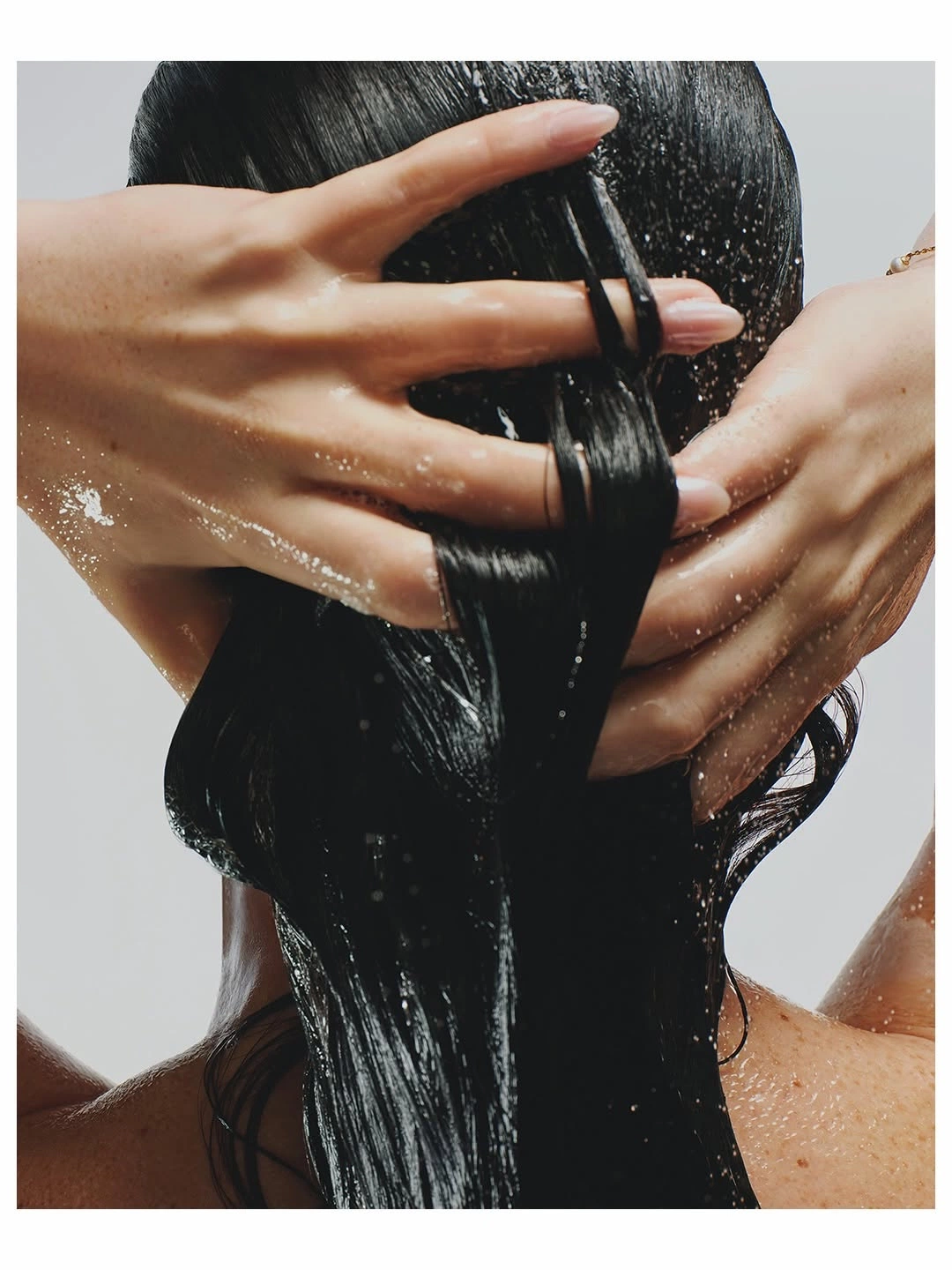
We know that haircare is a up-and-coming category, but new launches are getting really specific. Some of which combined the longevity trend as well (i.e. fibre longevity claim) Natural anti-dandruff and Anti scalp odour claims were mentioned, indicating the refinement of the hair care consumer, moving away from simple 'glossy hair' or 'conditioning' claims.
10. Efficacy claims are getting more aggressive
I noticed a few ingredients that claimed results in 15 mins, 30 mins and 1 hour, much quicker than the usual 28 day test. Possibly egged on by the fast acting results of aesthetic treatments and weight loss medication, consumers are now demanding fast acting, visible and substantial results. They can get results fast in other aspects of their life, why not in their skincare too?
Brands need to carefully select which (claims are worth investing in
One trend that I noticed but didn't add to the above list because it has somewhat transcended trend status, is the fact that natural and vegan alternatives will always reign supreme. Even though the industry is loosening its grip on 100% natural formulas in favour of efficacy, we still see a lot of natural or vegan alternatives being launched every year. On the consumer level, apps like Yuva and Hwahae drive this change.
Overall, this year's show was quite different from last, and there was an obvious shift towards asian originated (be it Korean or Chinese) ingredients. The claims are getting more scientific, yet we need to be careful not to overwhelm the consumer with technical jargon. Choosing the right clinical test that suits your product claim is now an important marketing decision. The ingredients that are sticking around have easy to explain science to back it up.